Mantra (in Sanskrit):
अ॒हं के॒तुर॒हं मू॒र्धा अहमुग्रा विवाचनी ।
ममेदनु क्रतुं पतिः सेहानाया उपाचरेत् ॥
📖 Source & Creator
This powerful mantra is found in the Rigveda, specifically in Mandala 10. It is traditionally attributed to Indrani, a divine feminine voice representing strength, authority, and intellectual clarity.
🕰️ Time Period
The Rigveda is one of the oldest known texts in human history, composed approximately between 1500 BCE – 1200 BCE (and possibly even earlier through oral tradition).
This places the mantra at over 3,000 years old, making it one of the earliest recorded expressions of feminine identity and empowerment.
✨ Meaning (Simple English Interpretation)
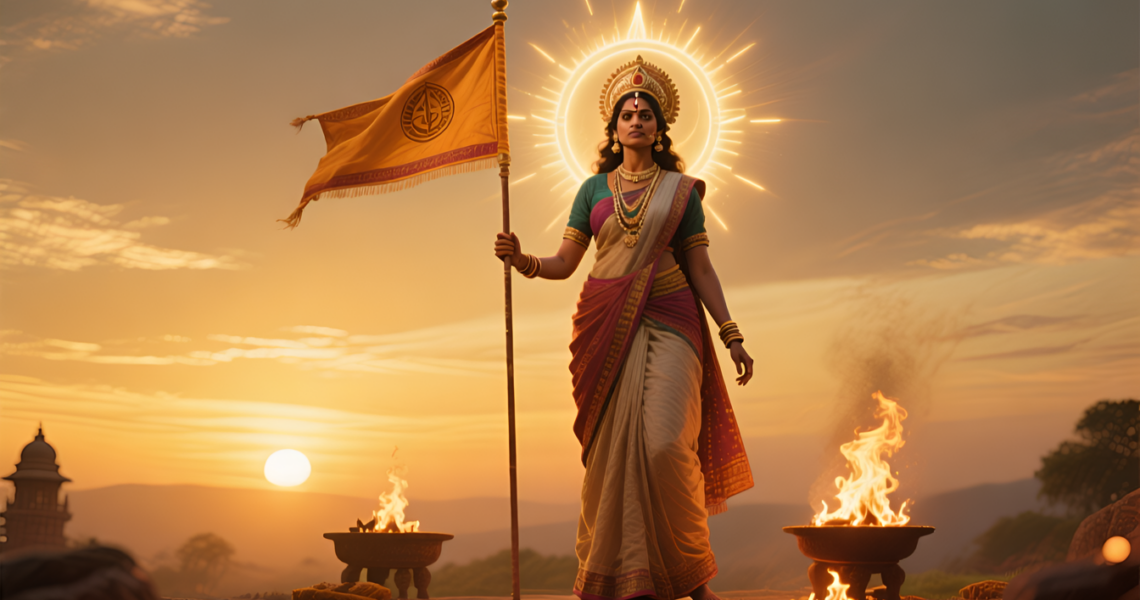
“I am the banner (symbol of identity), I am the head (leader).
I am powerful, I speak with authority and clarity.
My will is followed by my husband;
He acts in accordance with my strength and wisdom.”
👉 In essence, this is a bold declaration of self-identity, leadership, and influence by a woman.
🌟 Why This Mantra Is Unique
1. Self-Declaration, Not Permission-Based Identity
Unlike many later philosophies where identity is given or defined by society, here the woman defines herself:
- “I am the leader”
- “I am powerful”
- “I speak with authority”
This is internal empowerment, not granted empowerment.
2. Equality Beyond Symbolism
The line “my husband follows my will” shows:
- Not domination, but mutual respect and influence
- A partnership model, far ahead of its time
Compare this to many ancient civilizations where women had little to no agency—this stands in sharp contrast.
3. Voice as Power (Vिवाचनी)
The mantra emphasizes speech and expression:
- A woman is not silent
- She is articulate, expressive, and impactful
This aligns with modern ideas of freedom of speech, but existed thousands of years ago.
🌍 Comparison with Other World Philosophies
- In many ancient traditions, women were often portrayed as supportive or secondary figures
- Here, the woman is:
- A leader (मूर्धा)
- A symbol (केतु)
- A decision-maker
Even in later global philosophies, the idea of women asserting authority so directly is rare.
🔥 Timelessness of Vedic Thought
This mantra shows why Vedic literature continues to be studied worldwide:
- It addresses identity, power, and equality
- It does so without conflict-based narratives
- It presents empowerment as natural, not revolutionary
👉 That’s why many scholars view Vedic thought not just as religion, but as a philosophical and psychological system.
🌿 Women’s Freedom in Ancient Times
This mantra is evidence that in early Vedic culture:
- Women could be thinkers, composers, and speakers
- They had intellectual and spiritual authority
- Their voices were recorded and respected
This challenges the modern assumption that women’s empowerment is a recent concept.
⚖️ Do We Need “Borrowed Feminism”?
This mantra suggests something important:
- Empowerment is not new to Indian civilization
- It was already present in its original philosophical roots
👉 Instead of importing ideas blindly, one can rediscover:
- Indigenous concepts of balance, respect, and dignity
This doesn’t reject modern feminism—but it shows that ancient frameworks already contained powerful foundations.
🌸 Final Thought
This mantra is not just poetry.
It is a voice across 3000+ years, declaring:
“I know who I am. I lead. I speak. I influence.”
And that voice still feels modern, relevant, and powerful today.