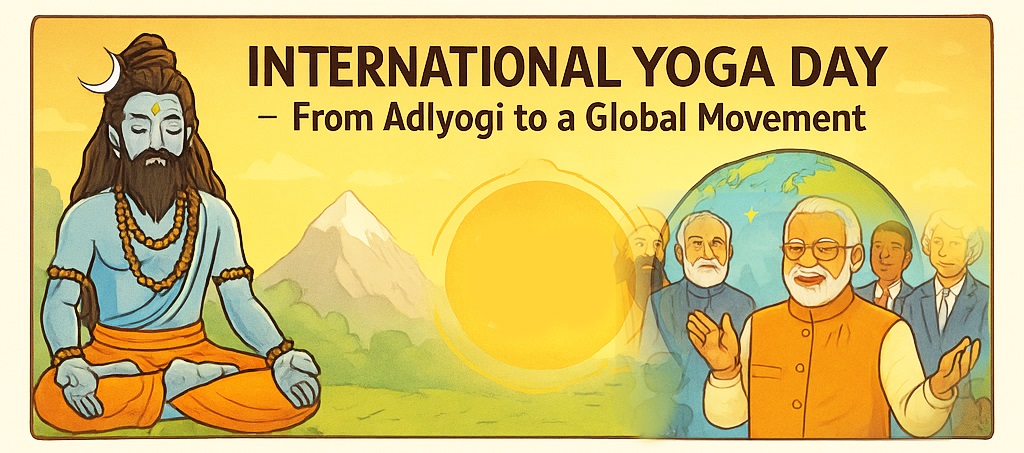
🧘♂️ International Yoga Day: From Adiyogi to a Global Movement
20/06/20251. The Divine Origins of Yoga – Adiyogi Shiva
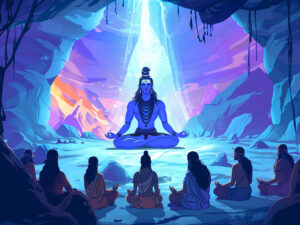
In the yogic lore, the story of yoga begins not with books, but with a divine presence: Lord Shiva. Revered as the Adiyogi (the first yogi) and Adi Guru (the first Guru), Shiva is said to have transcended all limitations and shared his profound yogic wisdom with the Saptarishis (seven sages) thousands of years ago, near Mount Kailash.
These teachings were not just physical postures, but sacred paths to spiritual union, consciousness elevation, and liberation (moksha). This era marks the pre-Vedic roots of yoga — long before it became a structured practice.
2. The Sage Who Codified Yoga – Maharishi Patanjali
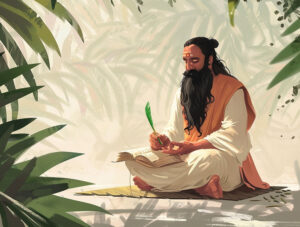
While Shiva was the source, Patanjali was the systematizer.
Around 200 BCE, Maharishi Patanjali compiled the Yoga Sutras, a collection of 196 aphorisms that laid the foundation of Raja Yoga (the path of control). He defined Ashtanga Yoga, the eightfold path:
Yama (restraints)
Niyama (disciplines)
Asana (postures)
Pranayama (breath control)
Pratyahara (withdrawal)
Dharana (concentration)
Dhyana (meditation)
Samadhi (liberation)
Patanjali clarified that Yoga is not just a physical exercise, but a science of mind and consciousness.
4. Modern Revival – Yoga Reaches the Global Stage
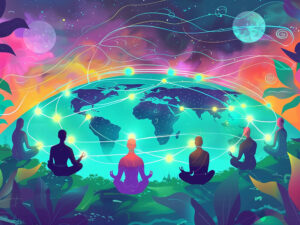
While yoga was always practiced in India, it saw a global revival in the 20th and 21st centuries, thanks to modern spiritual teachers and Indian leaders. Key figures include:
Swami Vivekananda – Introduced Yoga and Vedanta to the West in 1893 at the Chicago Parliament of Religions.
Paramahansa Yogananda – Spread Kriya Yoga in America and wrote Autobiography of a Yogi.
B.K.S. Iyengar – Popularized Iyengar Yoga worldwide with a focus on alignment.
T. Krishnamacharya – Called the father of modern yoga.
Sadhguru Jaggi Vasudev – Revived the spiritual dimension through the Adiyogi movement.
Sri Sri Ravi Shankar – Made yoga and pranayama accessible globally.
Baba Ramdev – Brought yoga to millions through TV, camps, and daily household routines, making it a household practice in India.
5. A Visionary Move – International Yoga Day
by Narendra Modi
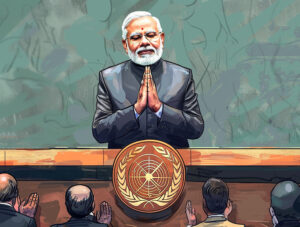
In 2014, Prime Minister Narendra Modi proposed the idea of an International Day of Yoga at the United Nations, emphasizing its holistic benefits for body, mind, and soul. With 177 countries supporting the motion, the UN declared June 21 (the summer solstice, the longest day of the year) as International Yoga Day.
“Yoga is an invaluable gift of India’s ancient tradition. It embodies unity of mind and body, thought and action… a holistic approach to health and well-being.” – Narendra Modi, UN Speech
6. How Yoga Day Is Celebrated
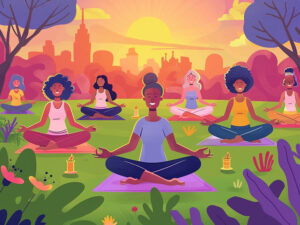
Across India and the world, millions of people join public sessions, workshops, and seminars. Celebrations include:
Mass yoga demonstrations
Meditation & breathwork sessions
Talks by spiritual leaders and health experts
Yoga competitions and cultural events
Social media campaigns and global livestreams
Every year brings a unique theme promoting a specific aspect of yoga like climate action, youth empowerment, or mental health.
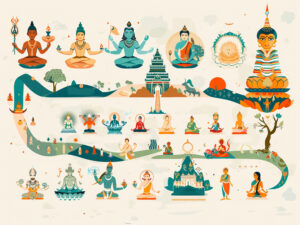
7. Timeline – Key Events in the Journey of Yoga
8. Important Books on Yoga

Yoga Sutras of Patanjali – Maharishi Patanjali
Bhagavad Gita – Discusses Karma Yoga, Bhakti Yoga, and Jnana Yoga
Hatha Yoga Pradipika – Swatmarama
Autobiography of a Yogi – Paramahansa Yogananda
Light on Yoga – B.K.S. Iyengar
9. Yoga – A Boon to Humanity
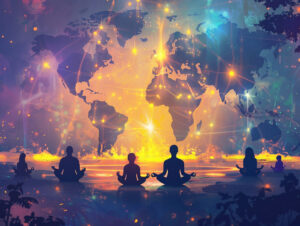
Yoga is a gift to all mankind, offering:
Mental clarity & peace
Physical fitness
Better immunity
Stress reduction
Spiritual elevation
Harmony between individuals and nature
In an age of anxiety, war, and environmental degradation, yoga teaches us balance, mindfulness, and compassion.
Conclusion: Returning to the Roots
Yoga is not a trend — it is a timeless truth. It was not invented in gyms but revealed in deep meditation, practiced by sages, and rooted in Sanatan Dharma. As the world embraces yoga, let us celebrate its true origin, uphold its spiritual purpose, and pass it on with authenticity and reverence.
🙏 Let us honor Yoga, not just as exercise, but as an eternal path to union — of body, mind, soul, and the universe. 🙏